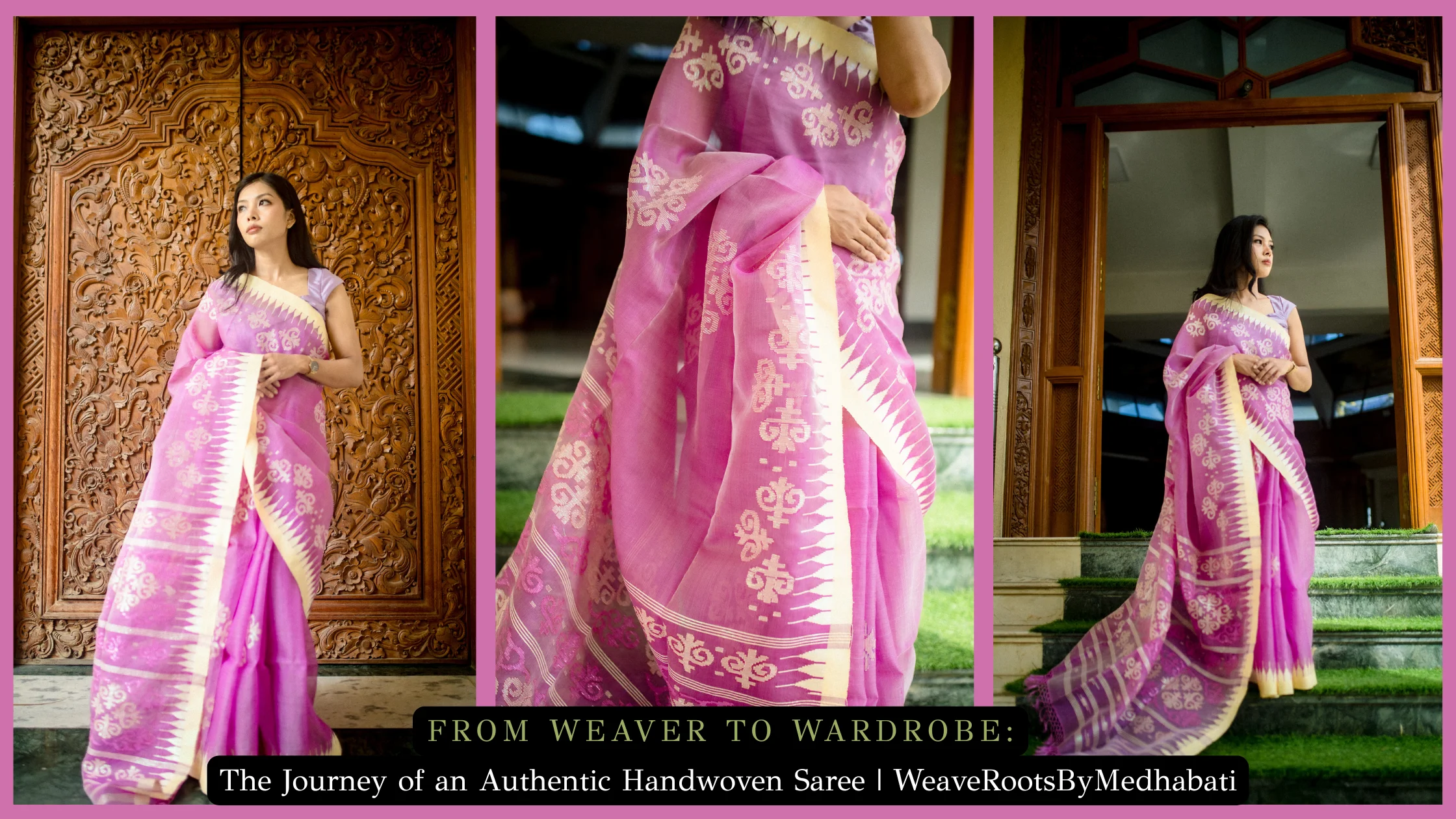
From Weaver to Wardrobe: The Journey of an Authentic Handwoven Saree | WeaveRootsByMedhabati
From Weaver to Wardrobe: The Journey of an Authentic Handwoven Saree | WeaveRootsByMedhabati
Handcrafted Textiles India, Indian Craftsmanship, Manipuri Handloom Sarees, Handwoven Textiles, Indian Artisans, Heritage Weaving, Artisan Fashion India, Sustainable Fashion India
A saree may appear effortless when it is draped, but behind that finished elegance lies a journey of skill, patience and craftsmanship. An authentic handwoven saree is not simply produced; it is carefully created through a series of processes that connect the artisan, the loom, the yarn and the final wearer.
From selecting the fibres to preparing the loom, weaving the fabric and completing the finishing touches, every stage contributes to the character of the saree. This journey is what gives handwoven textiles their distinctive identity and enduring appeal.
It Begins with the Fibre
The journey of a handwoven saree begins with its raw material. Depending on the textile, artisans may work with silk, cotton or other natural fibres. The choice of material influences the saree’s texture, weight, drape, appearance and overall character.
For silk sarees, the quality of the silk yarn is particularly important. Pure Mulberry Silk, for example, is appreciated for its smooth surface, natural lustre and graceful fall. Cotton offers a different experience, often valued for its breathability and comfortable feel.
Choosing the right fibre is therefore the foundation of the finished textile.
Preparing the Yarn
Before weaving can begin, the yarn must be prepared carefully. It may need to be cleaned, spun, wound and arranged according to the requirements of the design.
This stage demands precision because the yarn must be organised correctly for the loom. The preparation process may vary depending on the fibre, weaving technique and intended pattern.
Even before the first thread crosses the loom, skilled hands are already shaping the final saree.
Setting Up the Loom
The loom is at the heart of the weaving process. Setting it up is a detailed task that requires knowledge of yarn placement, tension and pattern structure.
The warp threads are arranged lengthwise, creating the foundation through which the weft threads will pass. The artisan must ensure that the threads are positioned correctly and maintain appropriate tension throughout the process.
For traditional Manipuri handloom sarees, weaving techniques and regional textile knowledge contribute to their distinctive character. The loom becomes a space where technical skill and cultural knowledge come together.
The Art of Weaving
Once the loom is prepared, the actual weaving begins.
The artisan carefully interlaces the warp and weft threads, gradually transforming individual strands of yarn into a continuous textile. Depending on the design, borders, motifs and other decorative elements may require additional attention and precise handling.
Unlike industrial production, handweaving is closely connected to the artisan’s movements and decisions. The pace is deliberate, and the process can take considerable time depending on the complexity of the saree.
This is one reason every authentic handwoven saree can carry subtle characteristics of its maker.
Creating Character Through Design
A saree’s identity is also shaped by its colours, borders, motifs and weaving details. Traditional designs can reflect regional aesthetics, cultural influences and generations of textile knowledge.
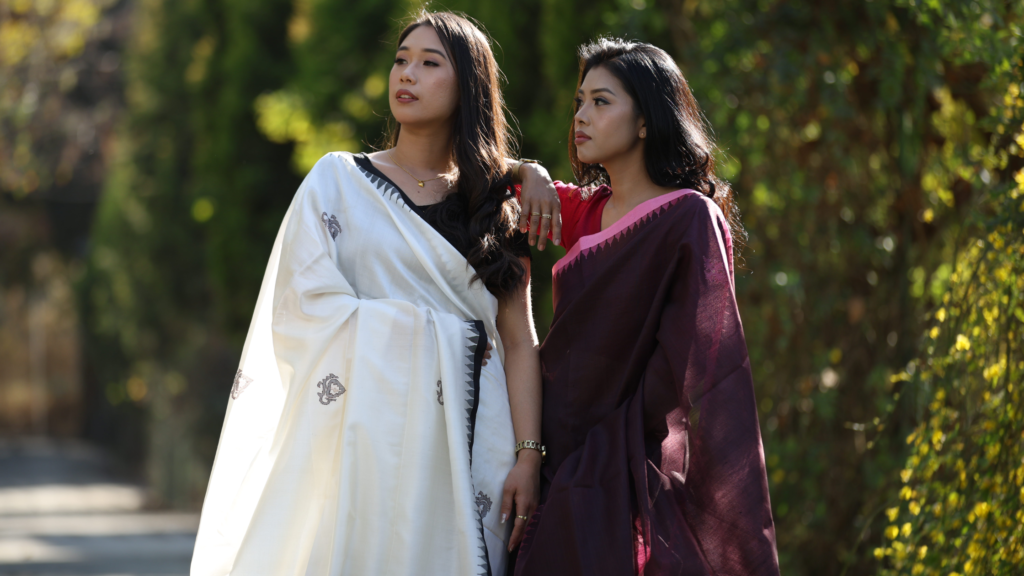
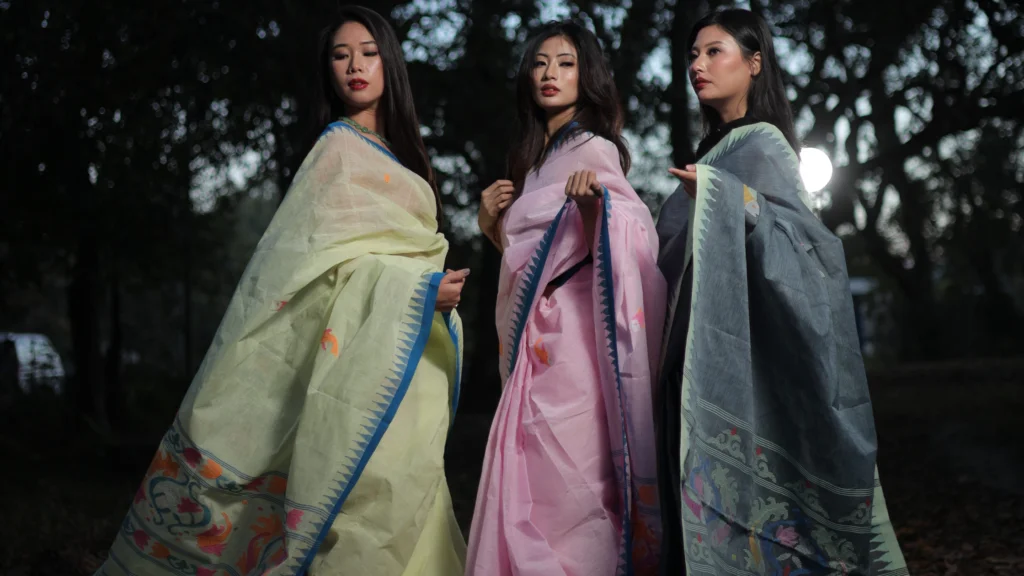
Contemporary handloom brands increasingly combine these traditional foundations with modern colour palettes, silhouettes and styling possibilities. This allows heritage weaving to remain relevant while respecting the techniques that created it.
The result can be a saree that feels rooted in tradition while fitting naturally into a modern wardrobe.
Finishing the Saree
After the weaving is complete, the saree still requires finishing. Loose threads may need attention, the fabric may be checked for consistency, and the textile may undergo processes that prepare it for presentation and use.
Quality inspection is an important part of this stage. Small variations are possible in handmade textiles because each piece is created through a human-led process. These details can distinguish handcrafted work from uniform mass production.
From Artisan to Wardrobe
Once completed, the saree begins another journey—from the artisan’s workspace to the customer.
When someone chooses a handwoven saree, they are bringing home more than fabric. They are choosing a textile connected to the labour, knowledge and creativity involved in its making.
This connection is particularly meaningful in Handcrafted Textiles India, where regional weaving traditions continue to contribute to the country’s rich textile heritage.
Why the Journey Matters
Understanding how a saree is made changes the way we see it. The finished drape may take only minutes to create, but the textile itself represents hours of preparation, weaving and finishing.
At Weaveroots By Medhabati, the appreciation of Indian craftsmanship begins with recognising this journey. From the first thread to the final drape, an authentic handwoven saree carries the presence of the hands that created it.
That is what makes the journey from weaver to wardrobe so meaningful: the saree does not simply arrive in your wardrobe—it arrives carrying craftsmanship, tradition and a story of making.